Skip to content
Bohemia Wars, home Follow development

Factions of Bohemia

Faith, property and power

The Hussites were not one army, and neither were their enemies. Your community is fictional, but it lives among the real sides.

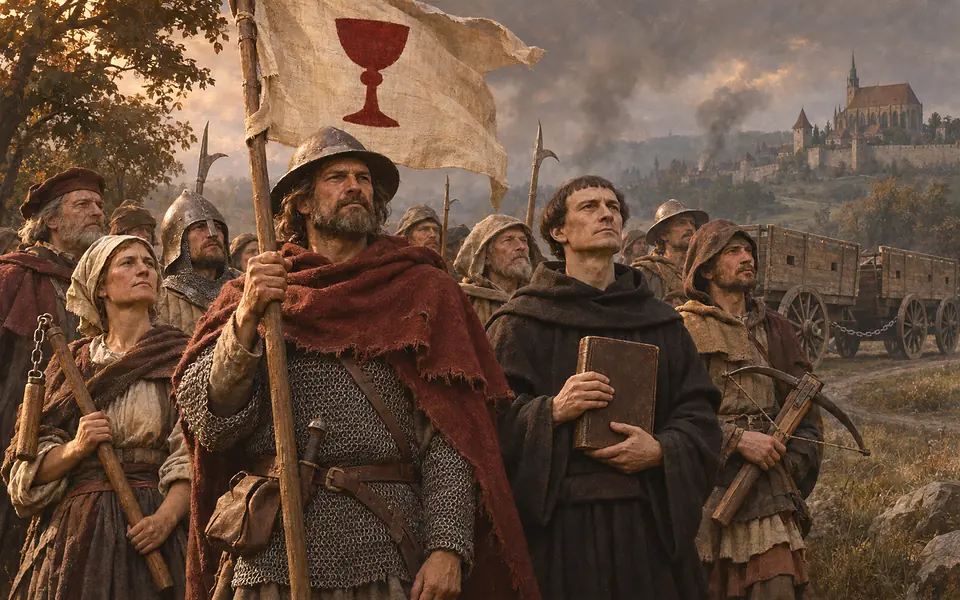
  • Painting: a captain in mail with a chalice banner and a priest with a book among the people of the community, wagons and a hilltop church behind.

    The Hussites

    Preachers, townspeople, peasants, craftsmen and lesser nobles who stood up for the chalice and the Four Articles of Prague. They were not one army: Taborites, Orebites and Praguers often disagreed.

    The Hussite parties

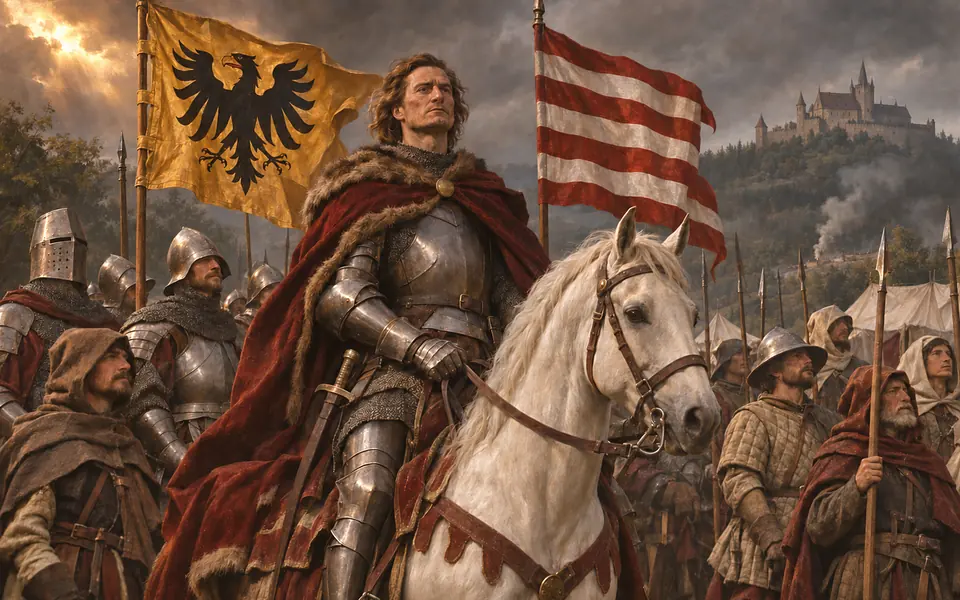
  • Painting: a commander in plate armour on a white horse under banners with a black eagle on gold and red-and-white stripes, foot soldiers and knights around him.

    Sigismund and his party

    Sigismund of Luxembourg, King of Hungary and King of the Romans. He had himself crowned at Prague Castle in July 1420, but Bohemia accepted him as king only in 1436. With him the Catholic nobility and the crusading armies from the Empire and Hungary.

    Against the Hussites

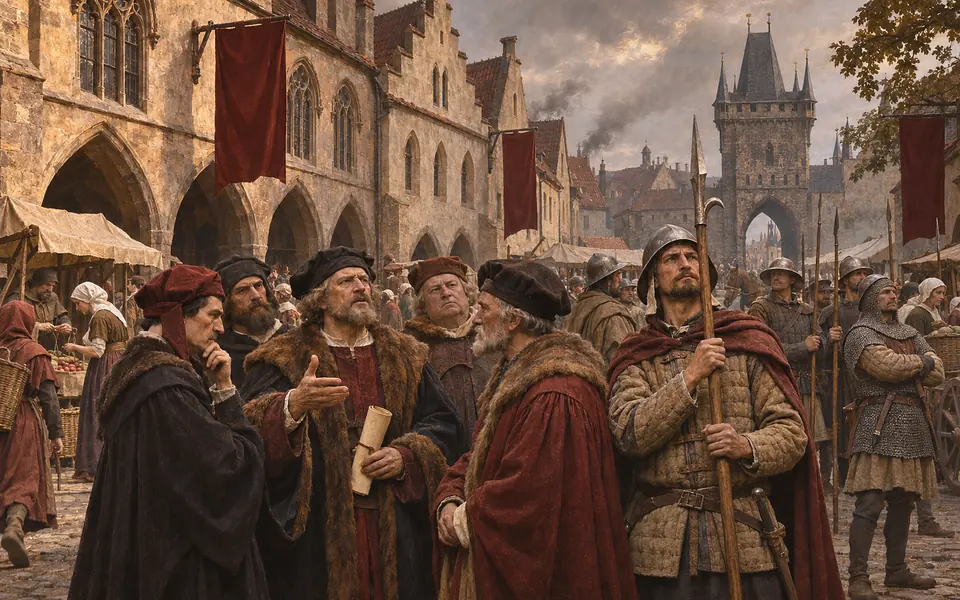
  • Painting: councillors and burghers on a Gothic market square with arcades, a gate tower and guards with spears behind them.

    The towns

    Royal towns had walls, money and their own councils. The Prague towns stood mostly with the chalice; in 1420 Plzeň and Kutná Hora sided with Sigismund. Whoever holds a town holds the region.

    Towns between the sides

In the demo and the first campaign you play the Hussite field community and meet the other sides as enemies or neighbours. Historical battles will be playable for both sides, and a campaign for the Catholic coalition comes later.

The Hussites

  • South Bohemia, Tábor

    Taborites

    The radical wing. Country people, small craftsmen and lesser nobility, elected captains. The Bible as the only law, a common treasury in the first months. Infantry with wagons, later the field army of Prokop the Bald.

  • East Bohemia, Hradec Králové

    Orebites and Orphans

    Named after Mount Oreb near Třebechovice. Close to the Taborites, but with their own captains. Žižka joined them in 1423, and after his death in 1424 they called themselves the Orphans.

  • the Prague towns and the university

    Prague

    Moderate Utraquists. They wanted the Church reformed and a king on their terms. The New Town more radical, the Old Town more cautious and richer. The Four Articles of Prague are the common Hussite programme.

  • northwest Bohemia, from 1425

    Žatec and Louny

    A league of the towns around Žatec and Louny under the captain Jakoubek of Vřesovice. It was formed in 1425, when the Hussites were split into rival leagues.

  • until 1434

    The field armies

    Standing armies of the leagues with captains and a supreme captain, the best known being Prokop the Bald. They lived off the land, loot and raids abroad. The defeat at Lipany shut them out of deciding the country’s fate.

  • 1420–1421

    Radicals on the fringe

    Picards and groups their enemies called Adamites. Tábor expelled them and Žižka had them persecuted in 1421. Most of what we know about them was written by their enemies.

Against them

  • the Rožmberks, the Šternberks, the Plzeň Landfrieden

    The Catholic nobility

    South Bohemian houses and Sigismund’s supporters, heavy cavalry. It was not only about faith: the Hussites seized church estates and the nobles defended their own. In 1434 they joined the moderate Hussites against the field armies.

  • crusades of 1420, 1421, 1427, 1431

    Sigismund and the crusaders

    Armies from the Empire and Hungary, and mercenaries, with papal legates in their camp. Strong in numbers, weak in divided command and short campaigns. A relief expedition for Karlštejn in 1422 never joined the fighting.

  • Meissen and Saxony, Silesia, Lusatia, Austria

    Neighbours across the border

    The Margrave of Meissen helped the Catholics hold Most, the Saxons held Ústí nad Labem, and Silesians and Lusatians plundered East Bohemia. In the autumn of 1421 Sigismund and his son-in-law Albert of Habsburg crushed the Hussites in Moravia. From 1427 these lands bore the brunt of the glorious rides.

The towns

In 1420 the Prague towns stood mostly with the chalice, and outside Prague so did Žatec, Louny, Klatovy and Písek. Plzeň, where Václav Koranda preached at the end of 1419 and Žižka briefly held out, soon fell to the Catholics and became the mainstay of Sigismund’s party in western Bohemia. Kutná Hora, rich in silver and run by a German patriciate, also sided with Sigismund at first.

Towns changed sides. Kutná Hora submitted to Prague in April 1421 and let Sigismund’s army in that December.

Some towns held to one side for the whole war. Most held out against Prague in 1421 and stayed Catholic to the end; Plzeň withstood Žižka and a siege of almost a year in 1433–1434. Such towns tied down Hussite garrisons across the whole region.